The desk shelf from Oakywood is one of those objects that quietly reshapes the rhythm of a working day. At first glance it appears simple: a solid wooden platform supported by two geometric steel legs. Yet once it settles on the desk, the entire surface gains a new sense of order. Monitors sit higher in a way that feels natural for the eyes, and the space beneath the platform becomes a calm zone where accessories can rest without cluttering the main working area. The change is subtle, but it gradually shifts how the desk behaves and how you move around it.
The hand-finished wood brings a grounded feel. It softens the geometry of modern screens and creates a warm line that runs across the width of the desk. The steel legs, shaped with clean precision, keep the shelf firmly in place. Nothing wobbles, nothing flexes. Even when holding two monitors, the structure remains steady, which gives the desk a quiet stability that affects the flow of everyday work.
Desk shelf – giving monitors a natural, comfortable height
Raising monitors is not only about ergonomics. It influences the entire field of view. With the desk shelf in place, screens sit at a level that feels instinctively right. The neck doesn’t lean forward as often, and the eyes move with less strain. This change in angle has a way of calming the centre of the workspace. It becomes easier to remain focused because the screens appear to anchor the top layer of the desk rather than sink into it.
The elevated platform also encourages a more considered layout. Instead of adjusting screens repeatedly throughout the day, they hold their position. Everything above the shelf becomes stable, predictable and visually aligned, which reduces those small distractions caused by micro-adjustments.
A height that feels effortless
When the viewing angle shifts into a natural zone, the desk stops pulling your attention back to itself.
A structure guided by reliable materials
The top of the shelf is made from solid wood, shaped and hand-finished so that it feels both smooth and substantial. Wood introduces a different kind of presence to the workspace. It adds warmth without drawing attention, and it contrasts softly with the cooler look of metal body devices. The legs are crafted from steel, giving the shelf its unmistakable stability. They create a wide, balanced stance, allowing the platform to handle dual-monitor setups confidently. The combination of wood and steel creates a grounded look: organic on top, precise underneath.
Reliability that shows in small details
Nothing about the structure feels uncertain. Even during long hours, the shelf keeps its posture.
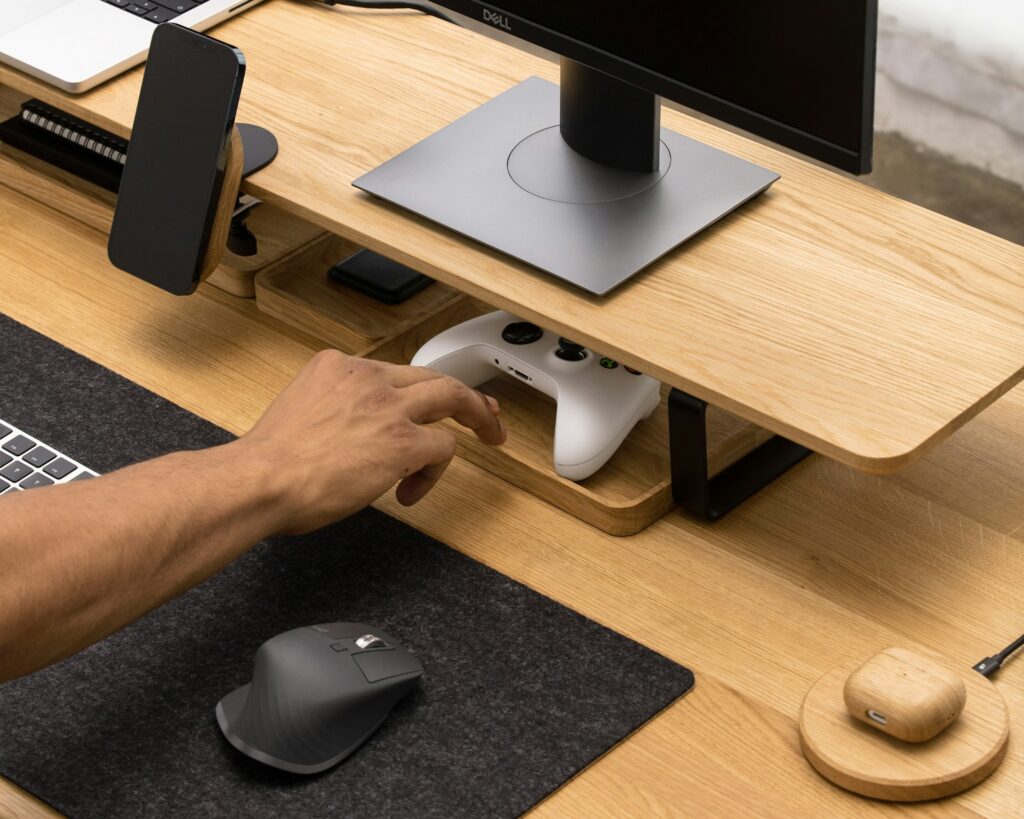
Desk shelf – space that clears the surface without hiding anything
One of the shelf’s most natural strengths lies in the area beneath it. It is not concealed storage; it is open, breathable space where objects can rest without interrupting work. A keyboard finds a home when not in use. A notebook can slide in and out without friction. Small accessories that usually drift across the desktop now gather in a place that feels deliberate rather than improvised.
Because the area remains visible, it does not disrupt the sense of openness. Instead, it encourages a kind of gentle tidiness. Items stay accessible but no longer demand attention. The desk begins to feel calmer, not because it is empty, but because it is organised through subtle layers.
A zone shaped by clarity rather than strict rules
The space beneath the shelf remains flexible enough to suit many ways of working.
How the shelf influences daily workflow
Working with a raised platform changes how the hands move across the desk. Reaching for a pen, sliding a notebook forward, tucking devices away — everything follows smoother paths. The layered layout creates a simple visual hierarchy: highest for screens, middle for everyday tools, lowest for actions like writing or sketching.
This gentle division helps reduce visual noise. When the eye scans the desk, it encounters fewer interruptions. Movements become more intuitive, and the workspace feels less fragmented.
The shelf also encourages more mindful placement of tools. Because the main surface feels more open, you naturally assign small areas to different activities, even without planning. This isn’t a strict method; it is simply what happens when the desk gains a second level that steadies the environment.
A calmer centre for multi-tasking
Switching between digital and analogue work feels less abrupt when the desk supports a layered flow.
Desk shelf – adapting to a wide range of setups
The desk shelf is shaped to support one or two monitors, but its function extends beyond that. It suits compact desks where vertical structure replaces width, as well as wide worktops where it becomes the visual anchor. It blends into modern spaces, wooden interiors or mixed-material rooms, because the design is both clean and warm.
Hand-finishing adds a sense of craftsmanship, making the piece feel personal even in a highly functional context. The shelf is made in Poland, which brings a touch of authenticity to its construction — the kind of quality that reveals itself the longer you live with it.
A piece that becomes part of the routine
Once integrated into daily work, the shelf rarely needs adjustment. It simply keeps the desk steady.
Desk shelf – a workspace that feels increasingly intentional
Over time, the presence of the shelf shapes the rest of the desk. Tools fall into consistent positions. Objects gain natural places to return to. Screens remain aligned without shifting. The desk becomes easier to clear at the end of the day and easier to approach in the morning.
Nothing about the shelf forces a specific system. It supports the habits already forming and gives them a structure that feels effortless.
It steadies the workspace not through strict organisation but through thoughtful elevation — a quiet layer that lifts what matters and lets everything else settle calmly beneath it.